The Ayvira Journal / Ingredients
Rooibos Explained: Naturally Caffeine-Free, Earthy and Gently Sweet
A plain-language guide to rooibos: how to taste it, how to brew it, and what we know and do not know about it.
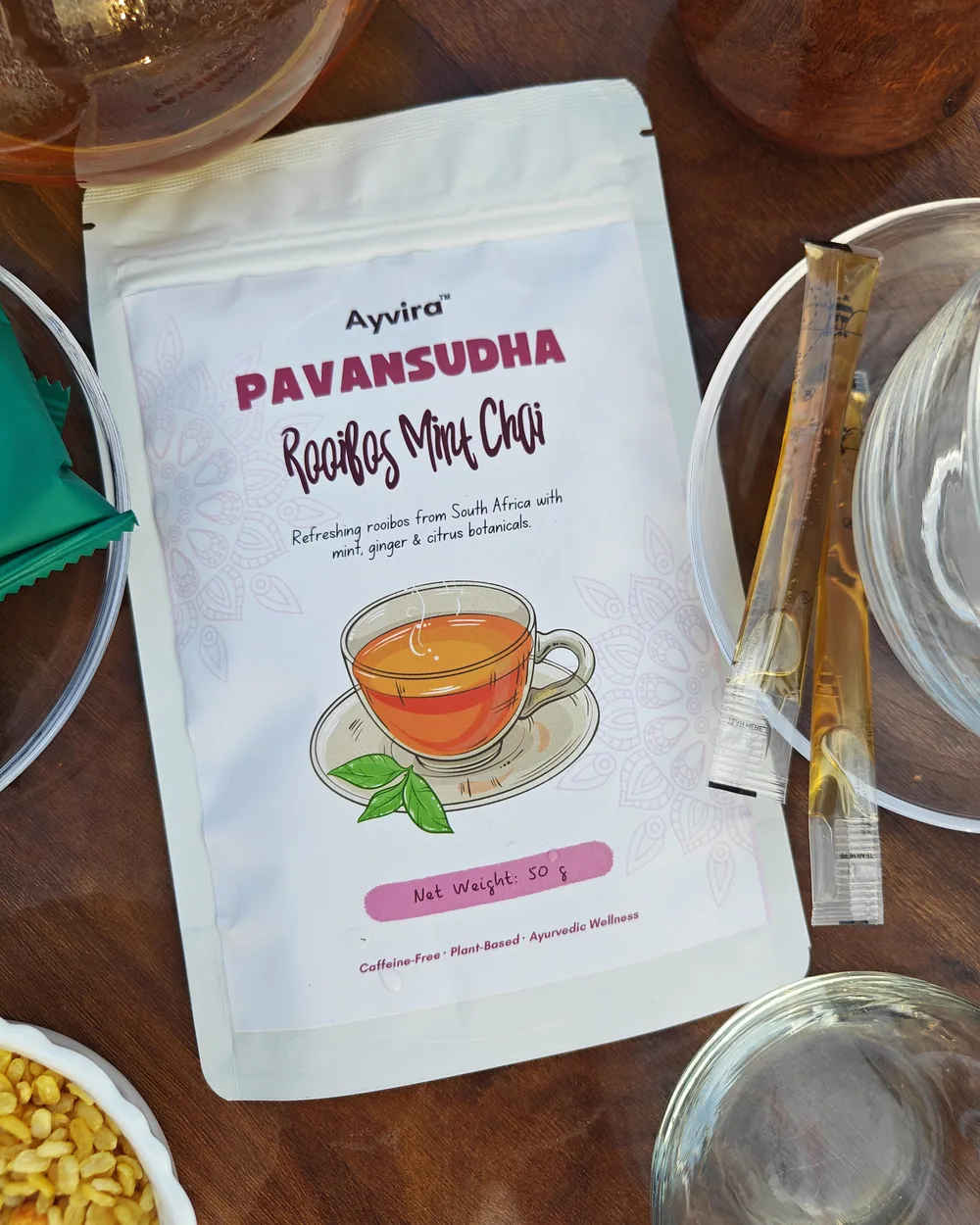
Rooibos tastes familiar and strange at once. It looks like black tea in the cup, but there is no bitterness waiting at the end. It is smooth, a little earthy and gently sweet.
Here is a simple guide to enjoying it, with what published sources say.
What it is
- Rooibosरूइबॉस · South African herb
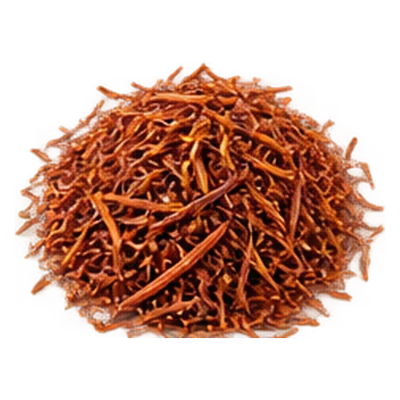
Rooibos is a South African herbal infusion, not part of classical Ayurveda.
Rooibos comes from a shrub native to South Africa. It is not a tea leaf, which is why it is naturally free of caffeine. Reviews describe it as low in tannins, which makes it forgiving to brew.
How to taste it
- Warm the cup first and pour freshly boiled water.
- Smell the steam before you sip: you may notice something woody and faintly sweet, a little like dried fruit.
- Take a slow sip and let it sit on the tongue.
- Notice what is missing: there is very little bitterness.
How to brew it
Because rooibos is low in tannins, you have a wide window. Three to five minutes of steeping suits most people. Go longer for a richer cup. A little extra time rarely hurts.
It is also lovely with milk, since its smoothness blends gently, and it holds up beautifully when served over ice.
What we know and what we do not
Reviews note that rooibos contains polyphenols such as aspalathin. They also note that human studies are limited and that most research comes from the laboratory. So we love rooibos for its flavour and its naturally caffeine-free character, and we do not claim anything beyond that.
Keep reading
More from the journal.

The Caffeine-Free Chai for Evenings
Why a rooibos and mint cup belongs after sunset, and a gentle five-step evening ritual to go with it.
Read the story ↗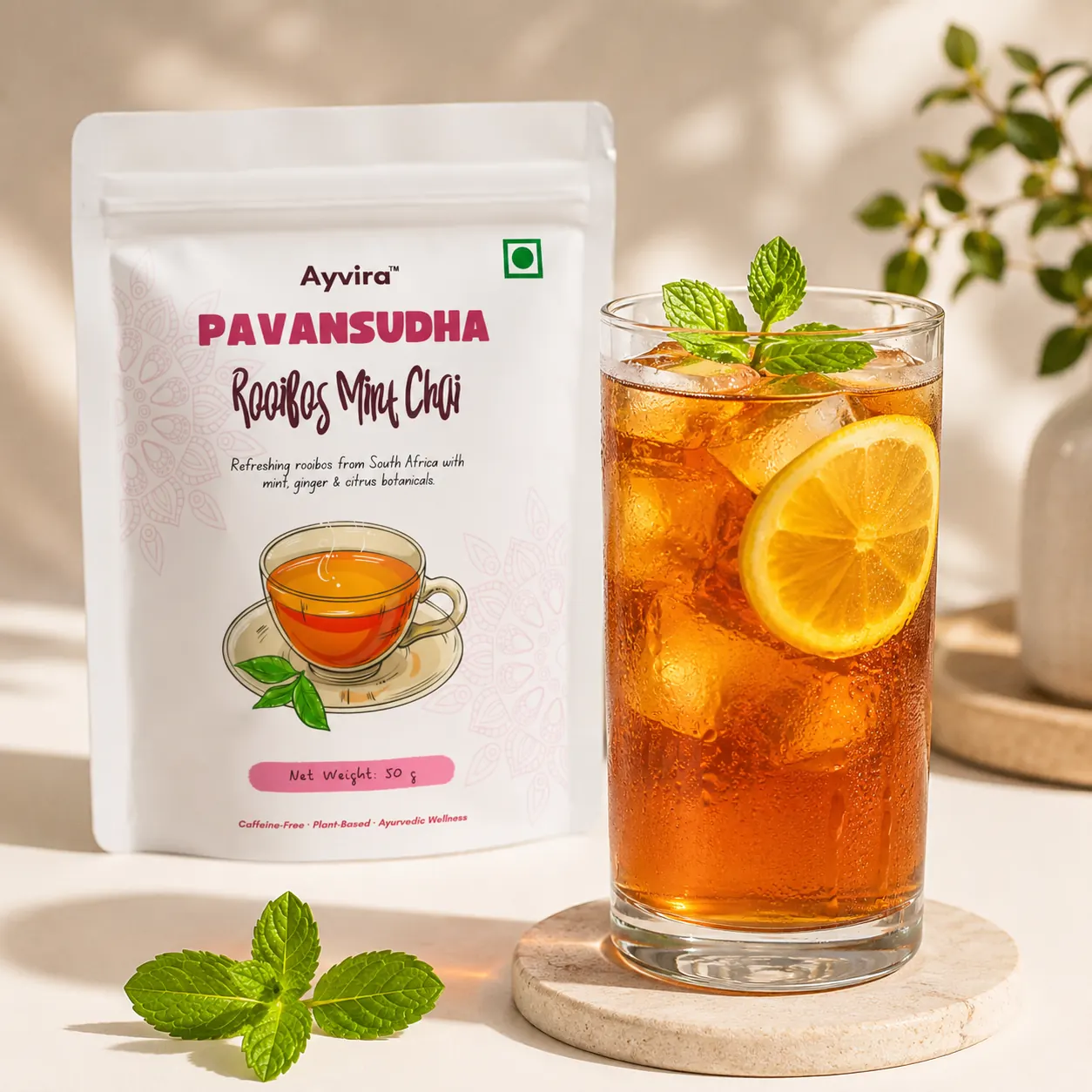
Iced Mint Chai: Three Cold Recipes for a Hot Afternoon
A clear glass, a handful of ice and a naturally caffeine-free blend. Three easy ways to turn Pavansudha into a cold drink.
Read the story ↗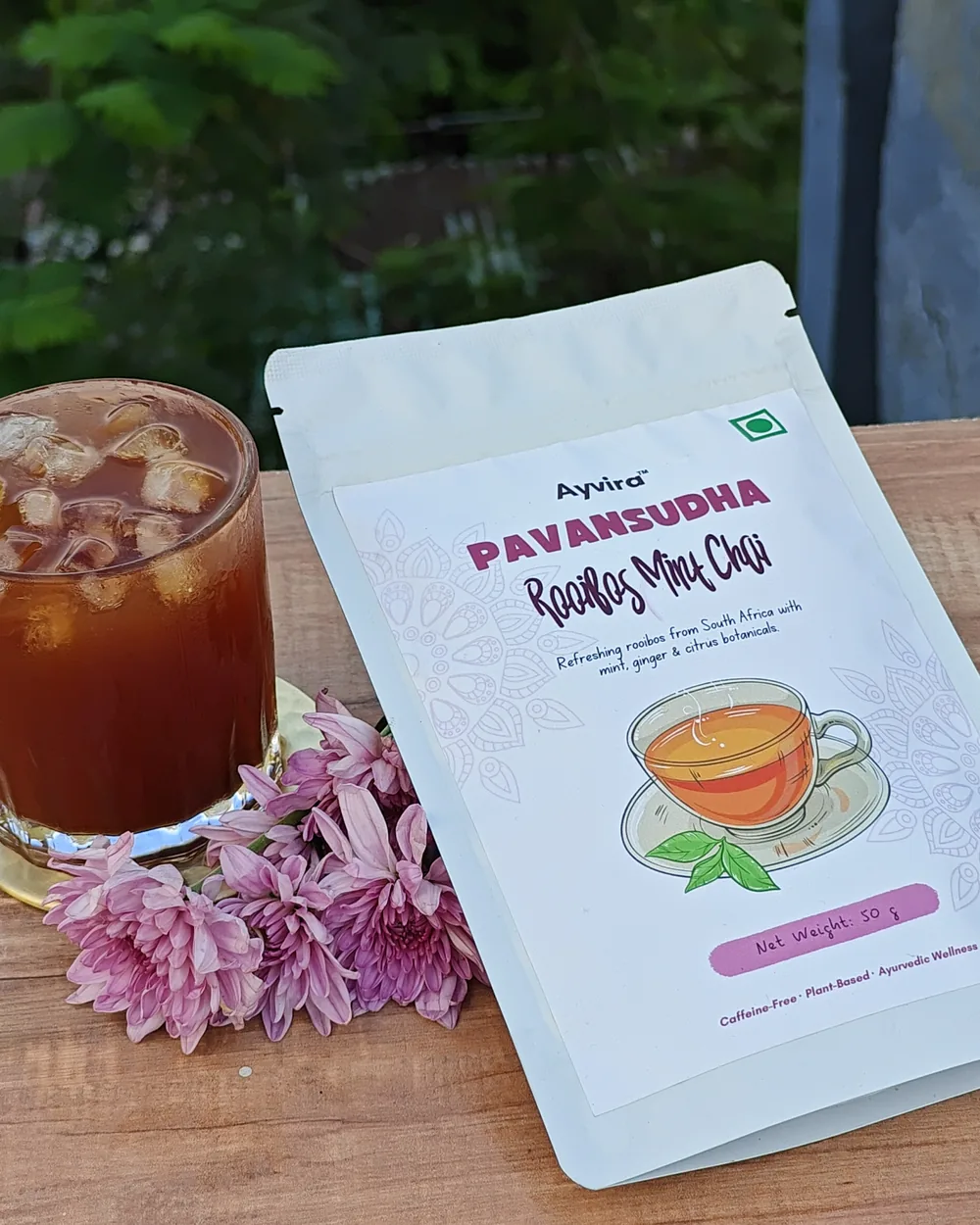
After the Meal: The Indian Habit of a Fresh Finish
From a spoon of saunf to a cup of mint, a look at the small ritual that closes an Indian meal.
Read the story ↗Ayvira teas are food products, not medicines, and are not intended to diagnose, treat, cure or prevent any disease. Notes about ingredients describe how they are traditionally used and what published sources report. They are shared for general interest and are not health claims for our teas. Please speak with a qualified health professional if you are pregnant, nursing, have a medical condition or take medication.