The Ayvira Journal / Ingredients
What Is Rooibos? A Gentle Introduction to South Africa’s Red Bush
Where rooibos grows, how it tastes, and how it differs from the tea leaf, with sources.
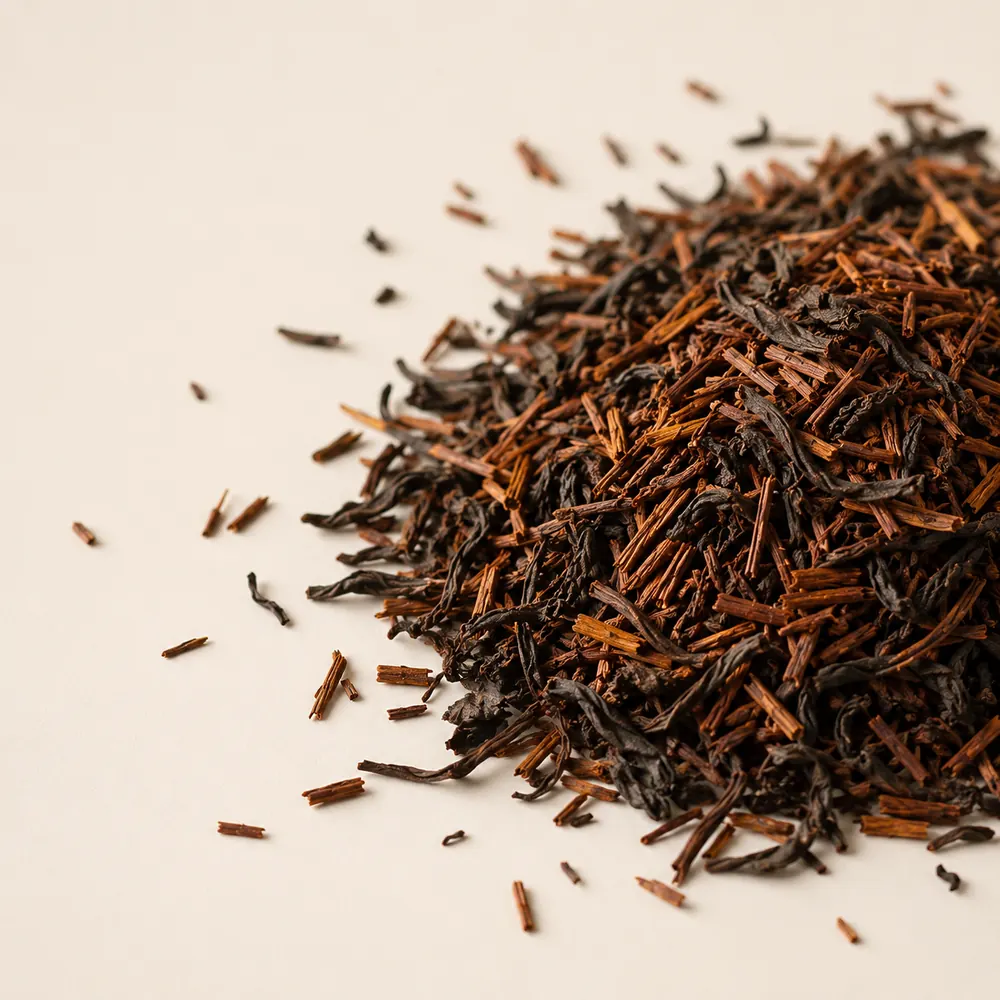
If you have seen rooibos in a blend and wondered what it is, you are not alone. It looks a little like tea and brews a little like tea, but it is not tea at all.
Red bush from the Cederberg
Rooibos is a herbal infusion made from the needle-like leaves of a shrub, Aspalathus linearis, which grows in the Cederberg mountains of South Africa. The name comes from Afrikaans and means “red bush”. Once the leaves are bruised and left to oxidise, they turn a deep reddish brown.
- Rooibosरूइबॉस · South African herb
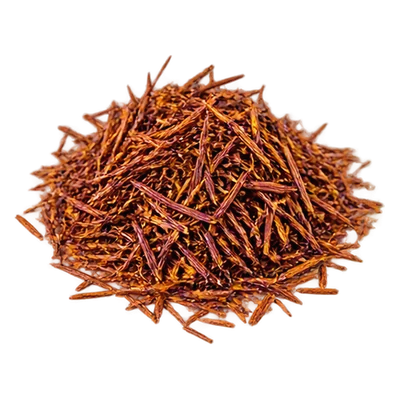
Rooibos is a South African herbal infusion, not part of classical Ayurveda.
How it tastes
Rooibos is earthy, gently sweet and smooth, with very little bitterness. Reviews note that it is low in tannins, which is why it is difficult to over-brew.
Is it caffeine-free?
Yes. Rooibos on its own is naturally free of caffeine, unlike black, green or white tea, which all come from the tea plant. That is why Pavansudha, which has no tea leaf, is naturally caffeine-free. Jeevras, in contrast, combines rooibos with Darjeeling black tea, so the blend contains caffeine.
What science says
Reviews describe rooibos as containing polyphenols such as aspalathin, which is a rare dietary source of this compound. They also note that human studies on rooibos are limited and that much of the research comes from laboratory and animal work. So we enjoy rooibos for its flavour, and we do not make health claims about it.
Keep reading
More from the journal.
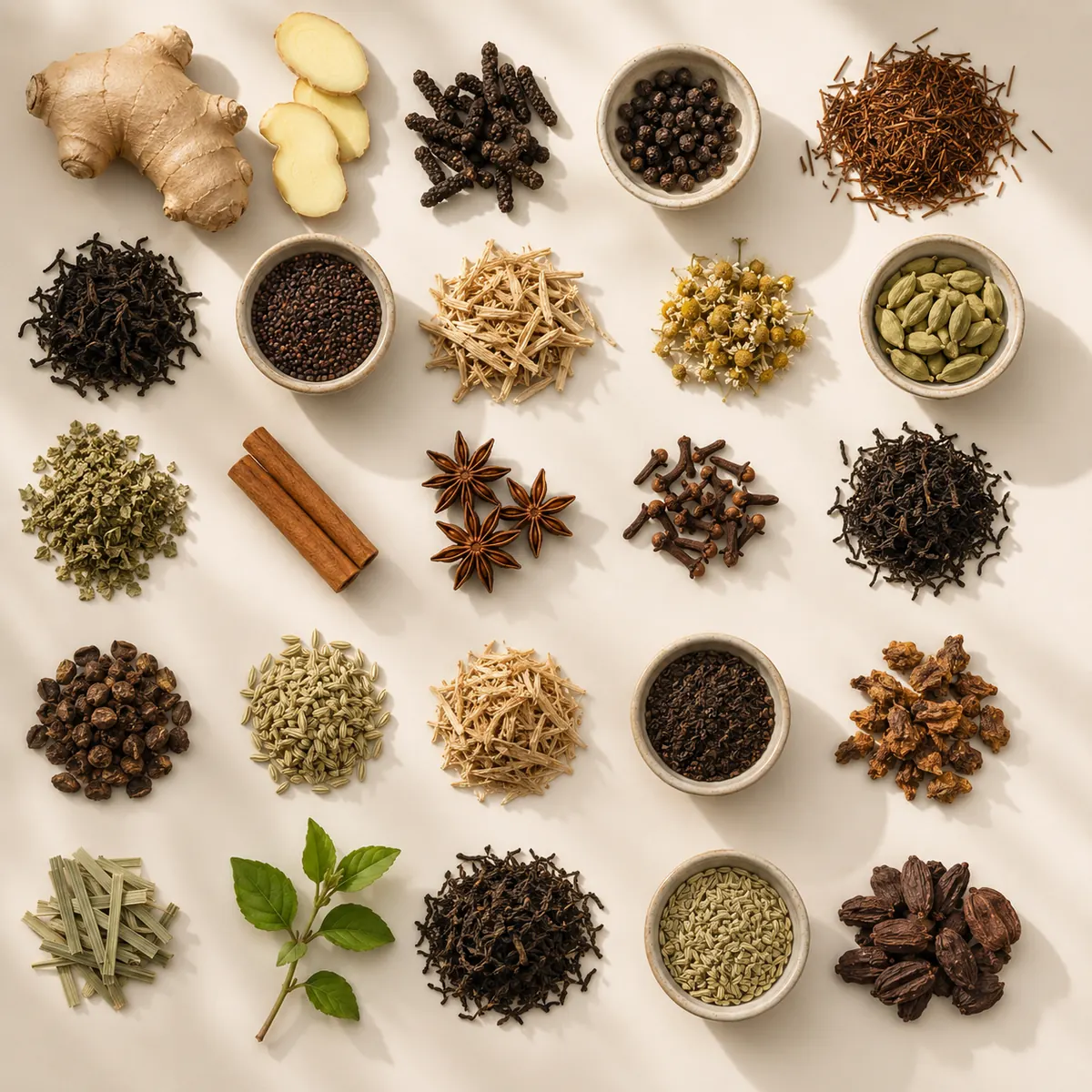
Twenty-Two Botanicals in One Cup
A guided walk through everything inside Jeevras, and what each ingredient has traditionally meant in Indian kitchens.
Read the story ↗
Rooibos Meets Darjeeling: The Story Behind a Fusion Chai
Two mountain regions, two very different leaves, and one cup that brings them together with the spice cabinet of an Indian kitchen.
Read the story ↗
The Afternoon Pause: A Fifteen-Minute Chai Ritual for a Busy Workday
A short reset between meetings, built around one good cup and a few minutes away from the screen.
Read the story ↗Ayvira teas are food products, not medicines, and are not intended to diagnose, treat, cure or prevent any disease. Notes about ingredients describe how they are traditionally used and what published sources report. They are shared for general interest and are not health claims for our teas. Please speak with a qualified health professional if you are pregnant, nursing, have a medical condition or take medication.